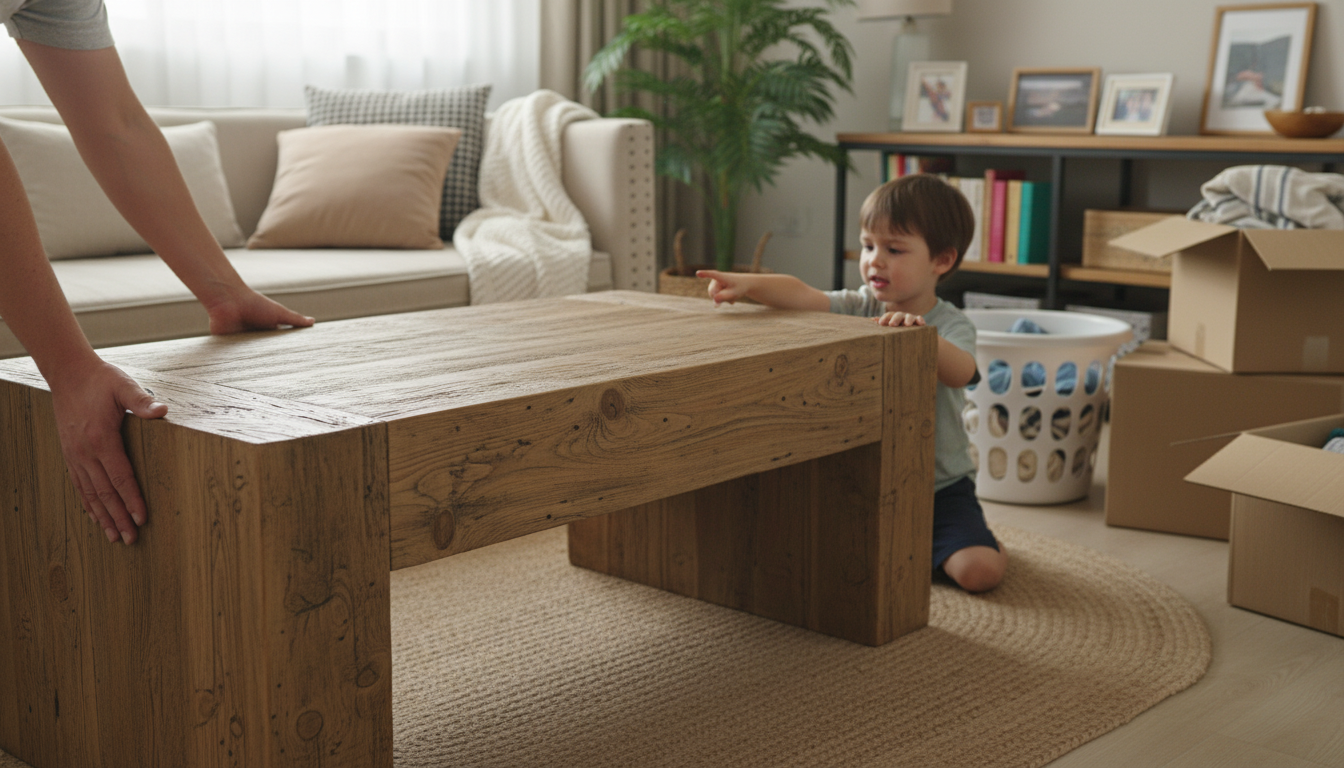
Rustic wood refers to lumber or finished wood pieces that intentionally highlight natural character and age marks rather than hiding them. Instead of looking perfectly uniform, rustic wood commonly shows visible knots, mineral streaks, grain variation, small cracks (often called checking), saw marks, and other organic imperfections that come from how the tree grew and how the board was milled and dried.
In home furniture and décor, “rustic” is more about the look and feel than a single species. Rustic wood can be oak, pine, acacia, mango, walnut, or reclaimed barn wood. What makes it rustic is the emphasis on authenticity—surfaces may be lightly brushed or wire-brushed to open the grain, edges may be left slightly irregular, and finishes often lean matte or low-sheen to keep the texture front and center.
Rustic wood pieces often feature warm, earthy tones and a tactile surface you can see and feel. A rustic tabletop may include knots that are sealed smooth, subtle ridges from the grain, or tonal shifts from heartwood to sapwood. Reclaimed rustic wood may also show nail holes, weathering, or patched areas—details that signal history rather than damage.
No. Rustic wood can be expertly crafted and carefully finished; the “imperfections” are chosen as design features. High-quality rustic furniture is typically stabilized (for example, cracks may be filled with clear or tinted resin), sealed to resist stains, and built with joinery that supports long-term use.
Rustic wood works well when paired with simple shapes and balanced materials—think metal legs, neutral upholstery, or stone accents—so the grain and character stay visually grounded. For a deeper dive into rustic natural wood choices, sizing tips, styling ideas, and care, visit this guide to rustic natural wood coffee tables.
Dust with a soft, dry cloth, wipe spills quickly, and use coasters to prevent water rings. Keep it out of prolonged direct sun and use a gentle cleaner made for finished wood to protect the seal.











Leave a comment