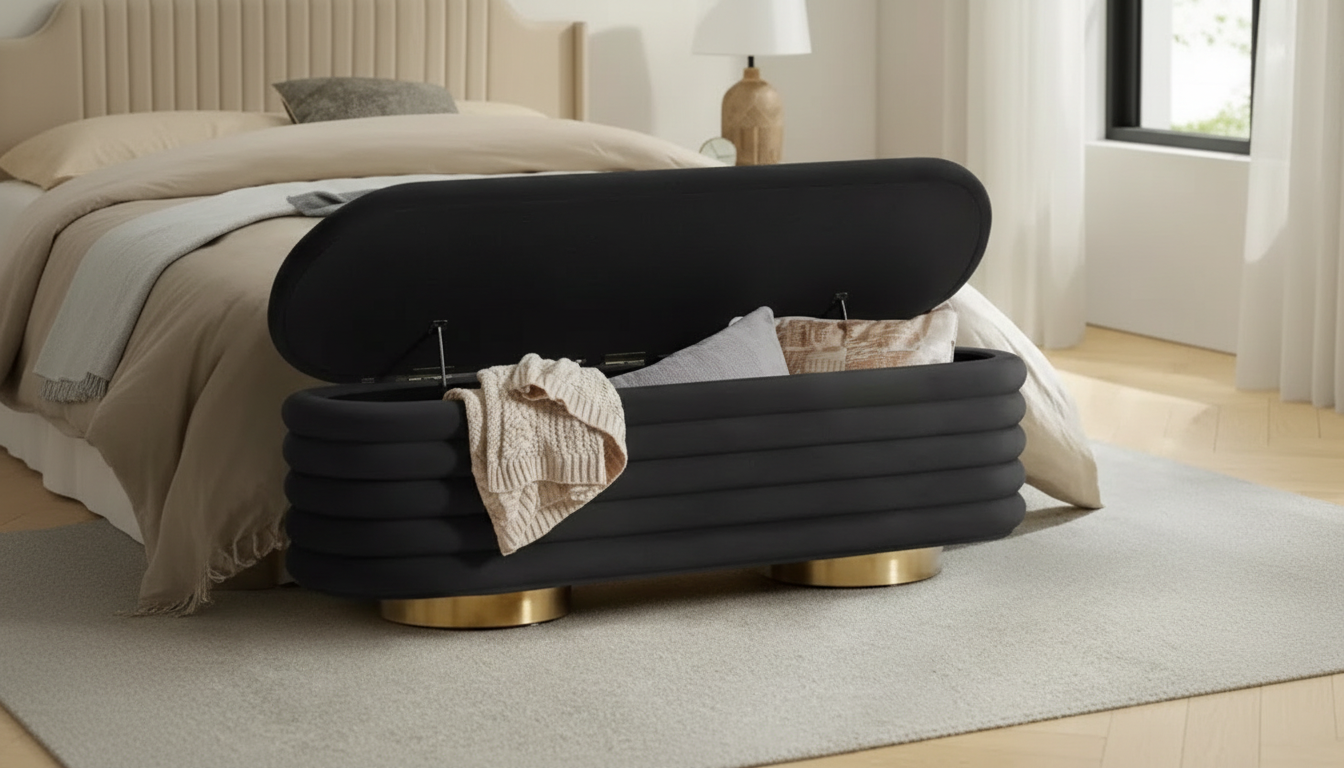
Velvet ottomans don’t automatically stain “easily,” but they can show spots faster than many smooth, tightly woven fabrics. Velvet’s soft pile can trap liquids and debris at the surface, and the way the fibers catch light can make a small mark look more noticeable. The good news: with quick blotting and the right care, most everyday mishaps (water rings, coffee drips, makeup smudges) are manageable.
How stain-prone a velvet ottoman feels comes down to the velvet type and how it’s finished. Performance velvet (often made with polyester) typically resists spills better than delicate cotton velvet because the fibers don’t absorb as readily. Darker or more varied colors also help camouflage minor marks, while very light shades may reveal staining sooner.
For spills, speed matters most. Blot—don’t rub—with a clean, dry cloth to pull up moisture before it settles into the pile. If needed, use a small amount of mild soap and water on a barely damp cloth, testing first in an inconspicuous spot. After cleaning, gently brush the pile in one direction with a soft upholstery brush once dry to restore the velvet’s smooth look.
Prevention helps keep velvet looking new. Using a fabric protector approved for velvet can add a buffer against liquids, and placing an ottoman away from high-splash zones (like beside a frequently used drink station) reduces risk. If the ottoman doubles as a tray table, a decorative tray is a simple way to avoid direct contact with condensation rings and snack spills.
For more styling and care considerations—especially if you’re looking at tufted designs or storage options—see the detailed guide here: Tufted Velvet Storage Ottoman Bench with Gold Legs.
Blot spills immediately with a dry cloth, then spot-clean with a lightly damp cloth and mild soap if necessary. Avoid rubbing and heavy water saturation, and brush the pile gently after it dries to restore the texture.











Leave a comment