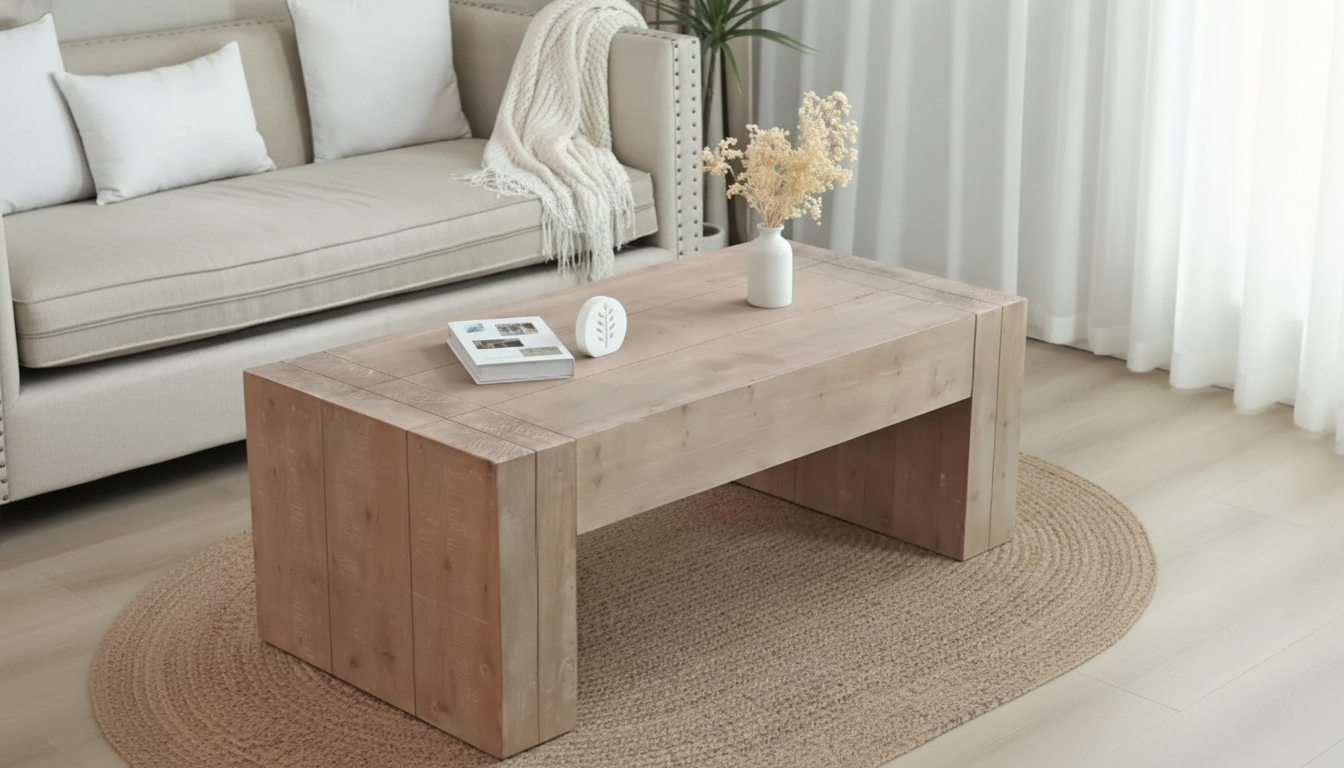
A rustic natural wood coffee table brings organic texture, visible grain, and a grounded feel to a living room. Beyond style, the right table should match the scale of the seating area, hold up to daily use, and be easy to maintain. From the first cup of coffee to movie-night snacks, a well-chosen piece becomes the center of everyday living—practical, durable, and full of character.
Rustic wood looks best when it feels honest: not overly perfected, not overly precious, and designed to age gracefully. A few details tend to separate a coffee table that simply “matches” from one that feels like it belongs.
- Natural variation is the point: knots, grain shifts, mineral streaks, and subtle color changes create a one-of-a-kind surface that looks collected rather than mass-produced.
- Rustic profiles tend to be substantial: thicker tops, sturdy legs, and simple silhouettes let the material do the talking instead of relying on busy ornament.
- Daily-use comfort matters: stable footing, a comfortable edge (not sharp), and a surface that works for cups, books, and remotes keeps the room livable.
- Dial in the rustic “direction”: farmhouse (lighter and airy), lodge-inspired (heavier and darker), or modern rustic (clean lines with prominent grain).
If you want an easy starting point with that warm, lived-in feel, consider the Rustic Natural Wood Coffee Table for a natural focal point that still reads polished in a finished space.
Choosing the Best Size and Proportions
Proportions are what make a coffee table feel effortless to use. A table that’s too tall can feel formal and awkward, while a table that’s too small can look adrift in the seating zone.
- Match height to seating: aim for a height close to the seat cushion height of your main sofa. Slightly lower often feels more relaxed for lounging.
- Keep comfortable clearance: leave enough space to walk around the table and to open any nearby storage, drawers, or cabinet doors without shuffling furniture.
- Balance the sofa length: a common rule of thumb is roughly two-thirds of the sofa’s length for a visually comfortable fit.
- Reduce “hip-bump” zones: in narrow rooms, slimmer shapes and rounded corners help circulation and make the layout feel less tight.
- Prioritize stability in busy homes: sturdy legs, a stable base, and practical finishes keep the table looking good even with heavy use.
Quick Placement and Fit Guide
| Room setup |
Recommended table shape |
Clearance to keep |
Why it works |
| Small apartment living room |
Round or oval |
18–24 in around main paths |
Soft edges improve flow and reduce visual bulk |
| Sectional seating |
Large rectangle or square |
16–20 in from seating edge |
Fills the center zone and keeps items within reach |
| Long sofa + two chairs |
Rectangle |
18–24 in on chair side |
Balances the arrangement and supports multiple seats |
| Busy family room |
Rounded rectangle / oval |
18–24 in walk paths |
Fewer sharp corners and easier circulation |
| Open-concept space |
Substantial rectangle |
20–30 in where traffic crosses |
Defines the lounge area without adding walls |
Wood, Finish, and Texture: What to Look For
Natural wood is both durable and dynamic. It’s strong enough for everyday living, yet it also responds to its environment—especially changes in humidity. Understanding the basics helps you pick a table that ages well.
- Species affects hardness and grain: denser woods generally resist dents better, while softer woods may show “character marks” sooner.
- Wood movement is normal: seasonal humidity changes can cause subtle shifting; solid construction and joinery help accommodate movement. For deeper technical detail, see the USDA Forest Service Wood Handbook.
- Finish impacts daily upkeep: matte and satin often hide fingerprints and smudges better than high-gloss.
- Plan for drinks and snacks: if you’ll set down glasses regularly, choose a finish that resists water rings and style with coasters and a tray.
- Expect natural variation: boards won’t match perfectly, and that’s part of the charm—especially in rustic pieces.
If indoor air quality is a priority, it’s also worth being mindful of finishes and ventilation during unboxing; the EPA’s Indoor Air Quality guidance is a helpful reference for VOC and indoor pollutant considerations.
Styling Ideas for a Cozy, Collected Living Room
Rustic wood looks best when it feels integrated—paired with pieces that echo its warmth while keeping the room from feeling heavy. The goal is “collected over time,” not “decorated all at once.”
Care and Everyday Protection for Natural Wood
For an in-stock option, visit the Rustic Natural Wood Coffee Table product page for current pricing and availability.
Coordinating Pieces That Pair Well With Rustic Wood
- Mix rustic with tailored storage: a streamlined case piece can offset the organic grain of a coffee table. In a bedroom or adjacent space, a piece like the Modern Solid Wood 6-Drawer Dresser with Gallery-Top can echo wood tones while staying crisp and structured.
- Echo wood tones in open-concept layouts: if the living area flows into the kitchen, repeat a similar warmth nearby. A functional accent like the 47″ Kitchen Island Cart with Storage, 2 Drawers & Rolling Buffet Sideboard Cabinet can help the overall space feel connected.
- Use one repeating detail: matching the leg finish, overall silhouette, or wood tone across pieces makes mixed styles feel intentional.
FAQ
Where to buy rustic natural wood
Look for specialty home retailers, curated online furniture shops, and reputable local makers that clearly list dimensions, construction details, and finish type. Before purchasing, confirm shipping protection, return policies, and whether the item is currently in stock.
Recommended for you










Leave a comment