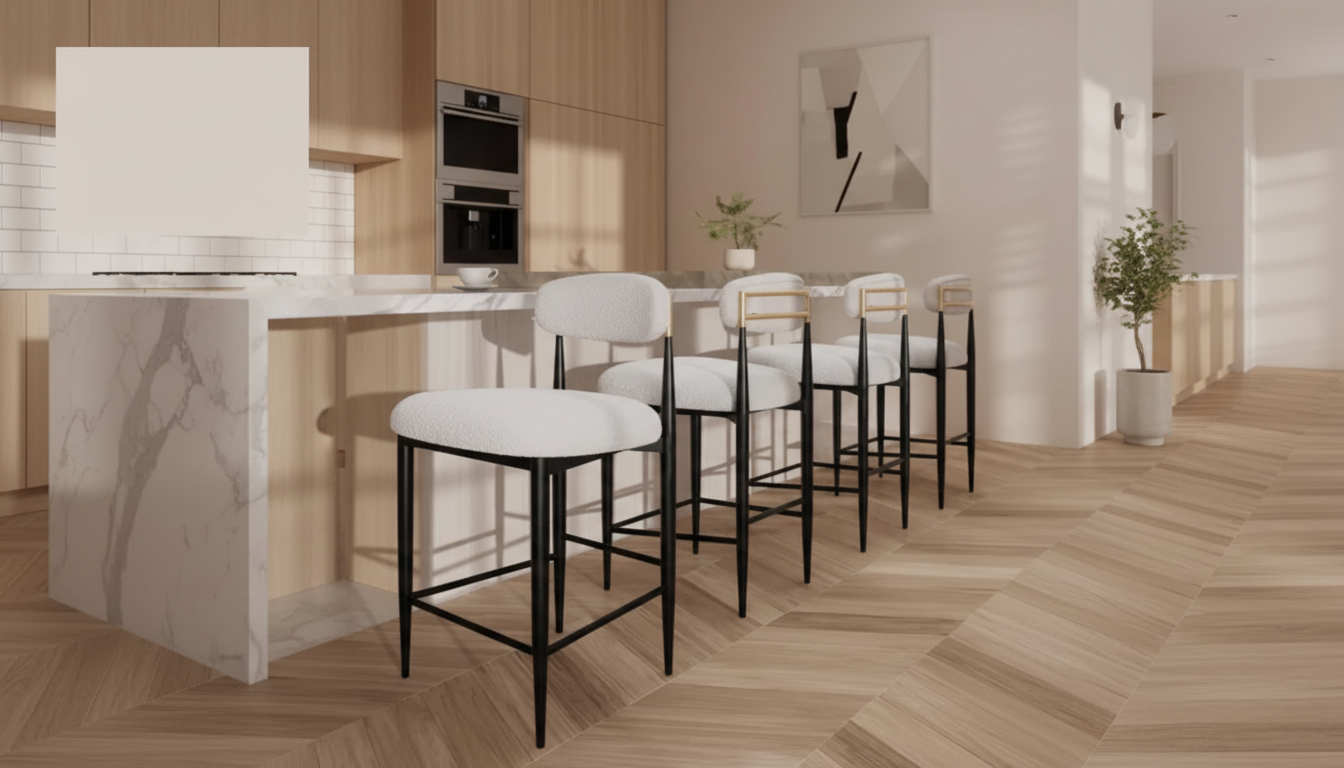
A 42-inch measurement is considered bar height, not counter height. In kitchen and dining furniture, “bar height” typically refers to surfaces around 40–42 inches tall, while standard “counter height” is usually about 34–36 inches.
When someone says “42” in the context of seating, they’re almost always talking about a 42-inch-tall bar table, bar counter, or high-top surface. That taller surface calls for taller seating so people can sit comfortably without knees hitting the underside and without having to reach up awkwardly to eat or work.
For a 42-inch bar-height surface, the most common match is a bar stool with a seat height around 28–30 inches. A helpful rule is to aim for roughly 10–12 inches of clearance between the seat and the underside of the tabletop or counter edge. That spacing tends to feel natural for most adults and allows room for legs and movement.
Counter stools are generally built for 34–36-inch counters, and their seat heights usually land around 24–26 inches. Put that shorter stool at a 42-inch bar and the seat-to-top gap becomes too large, which can feel like you’re sitting “down” at the table rather than “at” the table—uncomfortable for dining and tiring on the shoulders and arms.
Manufacturers sometimes label items loosely, so confirm two numbers: the surface height (floor to top) and the stool’s seat height (floor to the top of the seat). If you’re shopping for counter seating and want a quick refresher on fit and spacing, see this guide: https://interiorsgallery.shop/guide-26-inch-boucle-counter-stools-set-of-4-fit-care-style/.
A 36-inch counter typically pairs best with a 24–26 inch seat height (counter-height stool). That range usually leaves about 10–12 inches of comfortable clearance to the counter surface.











Leave a comment