For comfortable day-to-day access, plan on leaving about 24 to 30 inches of clear space along the side of the bed where you step in and out. This range gives most people enough room to turn, bend, and walk without brushing the nightstand, while still keeping essentials within easy reach from the mattress.
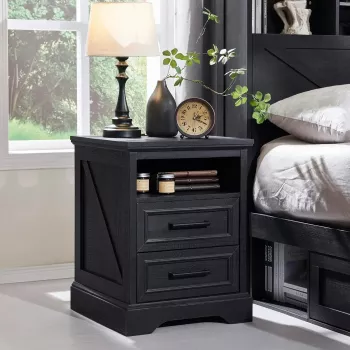
A wide nightstand can feel luxurious, but it also steals walkway space quickly. With 24 inches of clearance, you can typically pass by and open a drawer without feeling cramped (assuming drawers don’t collide with the bed frame). If your bedroom layout allows it, 30 inches feels noticeably more relaxed—especially when you’re making the bed, changing sheets, or moving around in low light.
Consider 30 to 36 inches if you share the room with a partner and both sides get frequent traffic, if the nightstand has deep drawers that need room to open fully, or if the path also functions as the route to a closet or bathroom. Extra clearance can also help if your bed has a bulky frame or protruding hardware that narrows the “real” walking space.
If you’re working with a tight bedroom, 18 to 24 inches may be workable, but it’s best saved for a low-traffic side of the bed or a guest room. To make a narrower gap feel less fussy, choose a nightstand with a slimmer profile, rounded corners, or doors/shelves instead of drawers.
Measure from the widest point of the bed (including frame or overhang) to the outermost edge of the nightstand. If the nightstand has drawers, confirm that you can still open them comfortably without hitting the bed or blocking your walkway.
For more layout tips and spacing examples, see the full guide here: https://interiorsgallery.shop/how-much-clearance-should-i-leave-between-a-wide-nightstand-and-the-bed-for-comfortable-access/.
Aim for a nightstand surface that’s about level with the top of the mattress or within 1–2 inches. That height keeps a lamp, phone, and water glass easy to grab without reaching up or down awkwardly.










Leave a comment