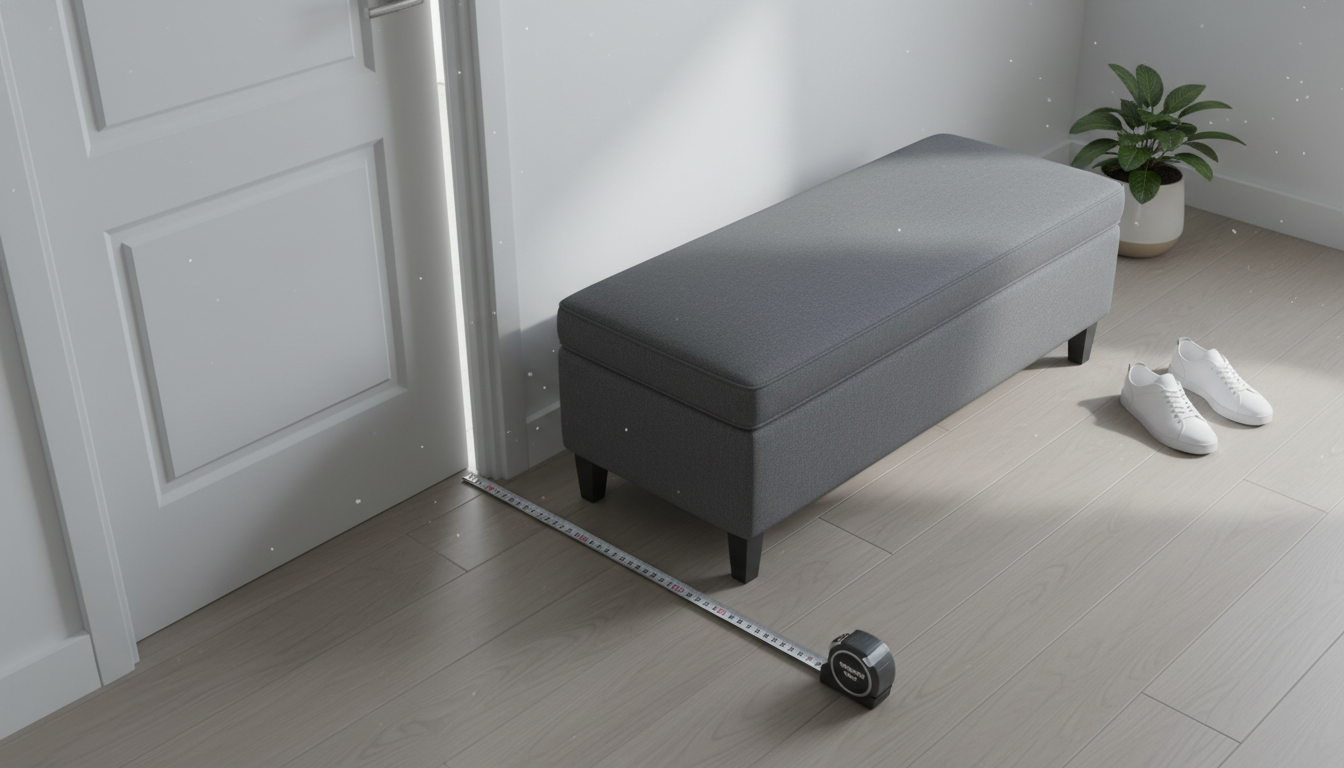
Aim for at least 6 inches of clearance between the edge of your ottoman bench and the door’s swing path at every point. If your entry door is used frequently (or opened quickly), a more comfortable target is 10–12 inches so toes, bags, and coat hems don’t catch as the door moves.
Entryways can look roomy until you account for the arc of the door. The key measurement is the clear space between the fully open door and the bench, not just how far the bench sits from the doorway. If the bench sits inside that arc, the door can hit it—or force people to squeeze through a tight gap.
Open the door to the position you use most (often 90 degrees, sometimes more). Place a strip of painter’s tape on the floor following the leading edge of the door to mark the swing path. Then measure from that tape line to where the front edge of the ottoman bench would sit. Keep 6 inches minimum for basic clearance; choose 10–12 inches if the entry is busy, you carry items in/out often, or kids are darting through.
Most ottoman benches are 15–20 inches deep. After placing the bench, try to preserve a 30–36 inch walkway for comfortable pass-through. If the space is tighter, consider a slimmer bench, a corner placement, or positioning it on the hinge side where the door edge may stay farther away (depending on layout).
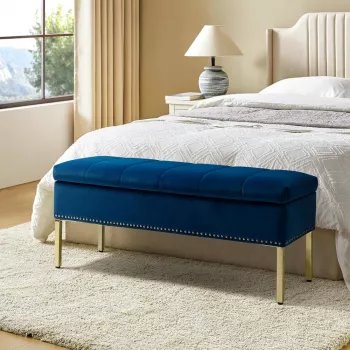
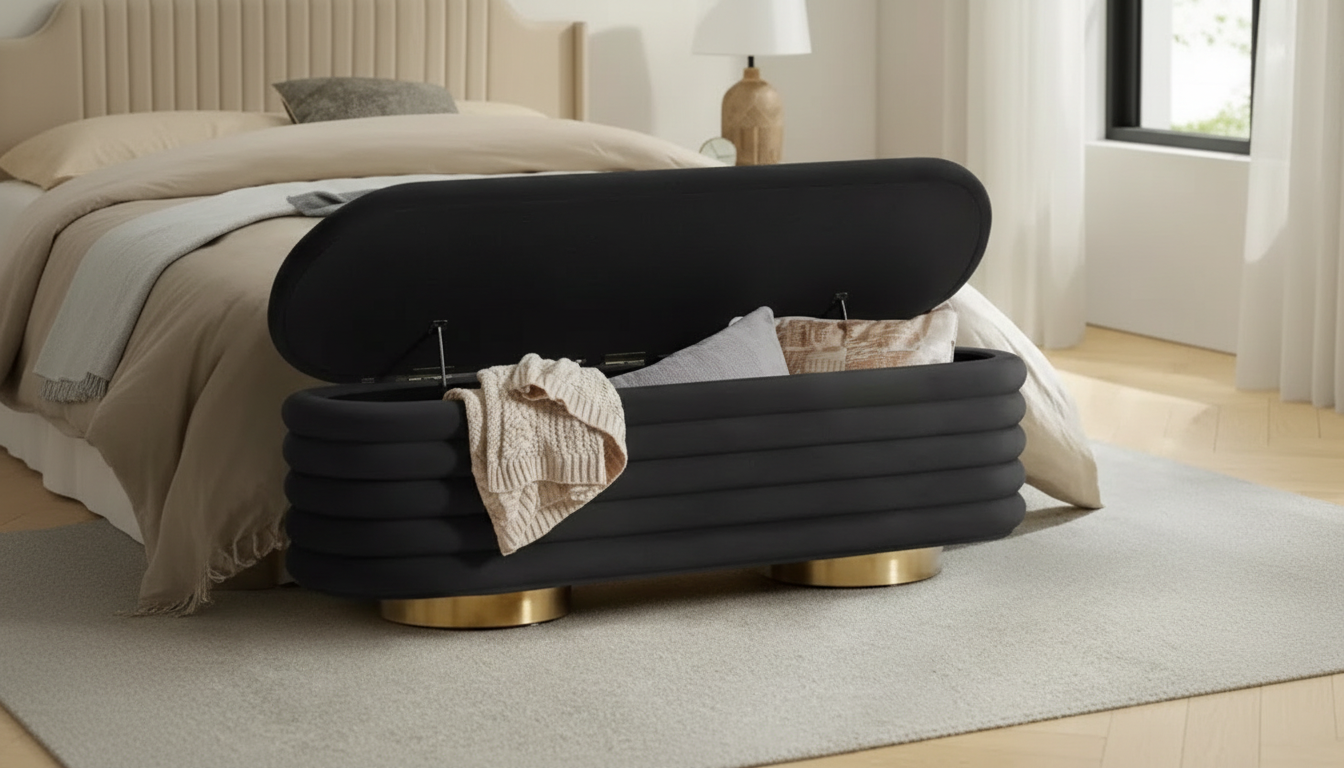
If you’re using a storage ottoman bench, make sure you can still open the lid without colliding with the door or trapping fingers against the wall. For more sizing and placement ideas, see the guide here: velvet flip-top storage bench with nailhead trim.
Look for a bench that’s about 15–18 inches deep and short enough to keep at least a 30-inch walkway. If possible, choose a design with slimmer arms or no arms to reduce visual and physical bulk.









Leave a comment