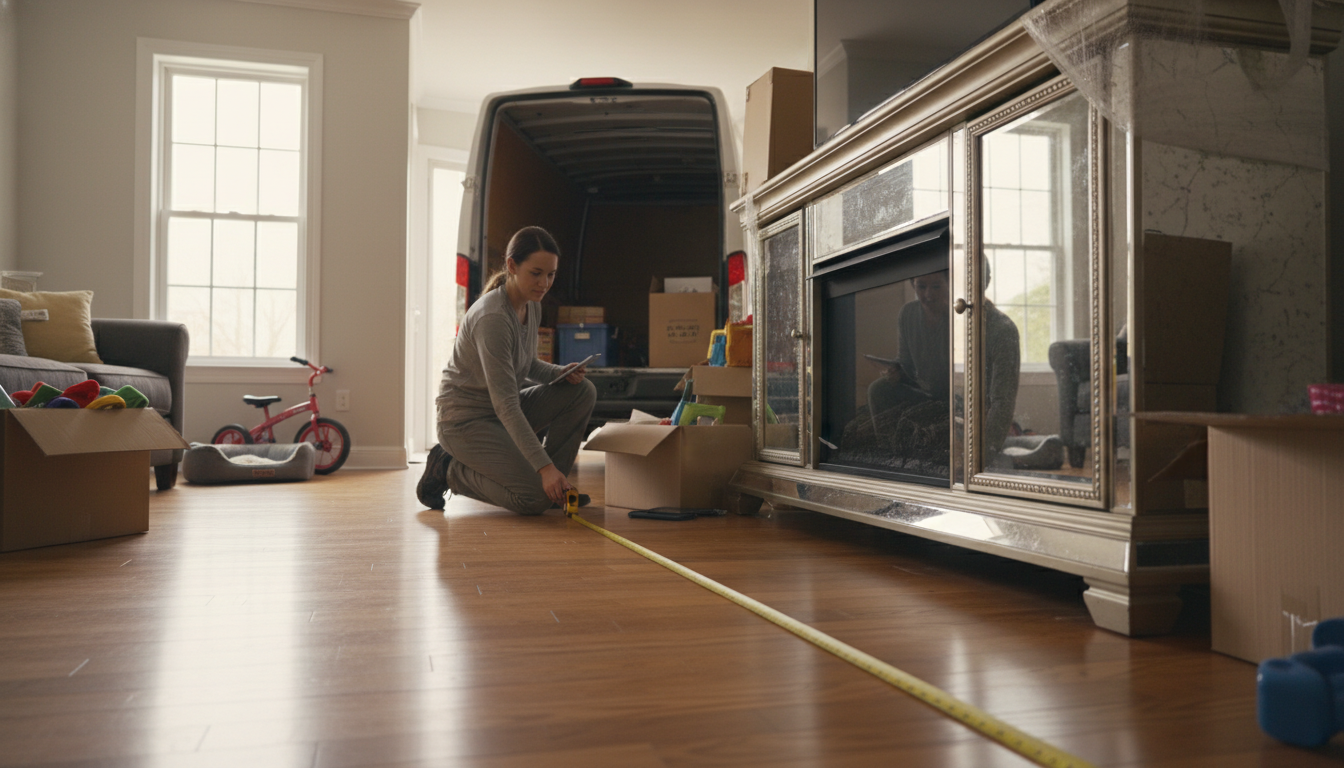
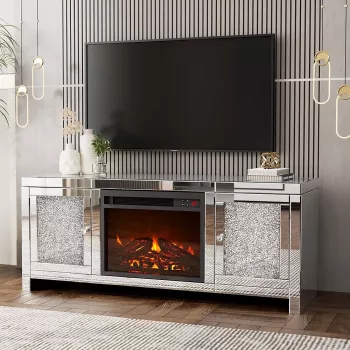
Start with two measurements: the console’s footprint (width, height, and depth) and the room’s “live” circulation paths (where people naturally walk). A mirrored fireplace TV console tends to feel larger visually because it reflects light and movement, so giving it comfortable breathing room helps the space look intentional instead of cramped.
Measure the full wall width where the console will sit, then note any baseboards, outlets, vents, or protruding trim that could affect placement. Next, measure the maximum depth you can dedicate to the console zone—this is the distance from the wall out into the room before you hit a walkway, seating, or another piece of furniture.
Walk the routes people actually use: from doorways to seating, from seating to the kitchen, and from seating to stairs or hallways. Mark these paths with painter’s tape on the floor. This quickly shows whether the console will land inside a traffic lane.
Aim for about 36 inches of clear walkway in primary traffic areas. If the space is tighter, around 30 inches may work for a secondary path, but it will feel narrow when two people pass. Also account for “swing” space: opening cabinet doors, drawers, or stepping close to use controls shouldn’t block the main route.
Tape a rectangle on the floor that matches the console’s width and depth. Then place a chair or box at the taped edge to simulate the console’s bulk at shin level. Walk past it as if carrying laundry or a bag—if it feels awkward, reduce the console depth or shift furniture to regain clearance.
For a deeper walkthrough, measurement tips, and fit examples, visit this full guide on measuring for a mirrored fireplace TV console with proper walkway clearance.
Place the console where the TV height and viewing distance feel natural—often 6 to 10 feet from the main seat for many living rooms. Make sure the console doesn’t force seating into the walkway; prioritize clearance first, then fine-tune viewing comfort.








Leave a comment