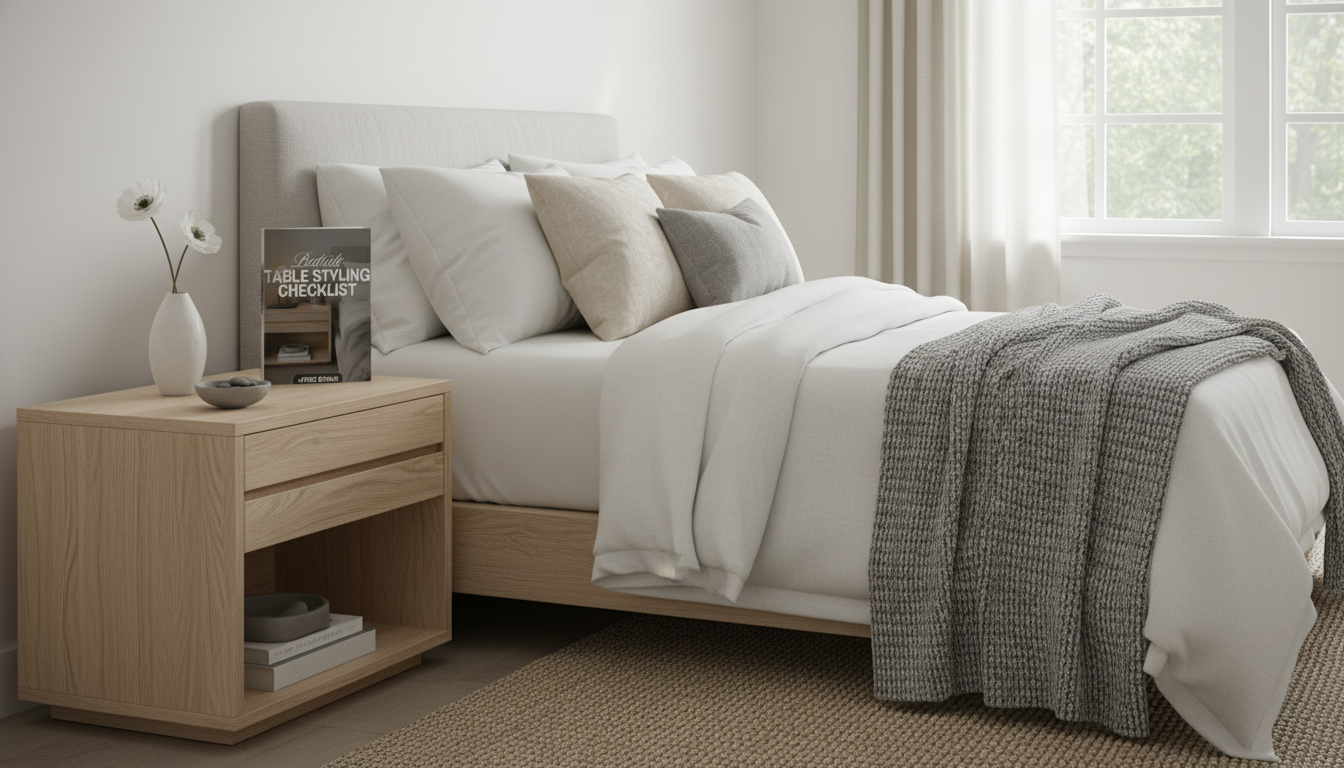
A well-styled bedside table should feel restful at a glance and functional in the dark. The goal is simple: make the surface easy to use, keep the “necessary but not pretty” items contained, and leave enough open space that the whole setup reads as calm. Use the checklist approach below—purpose, surface essentials, layering, storage, tech, and a quick reset routine—to keep your nightstand tidy, practical, and visually balanced day after day.
Before moving a single item, decide what your bedside table is for. Is it primarily a reading nook? A phone-free sleep station? A medication-and-water setup? Or a minimal landing zone for just the basics? When the purpose is clear, choices become easy: anything that doesn’t support that purpose goes elsewhere.
If you want a repeatable system, the Bedside Table Styling Checklist (digital download) makes it easier to define what’s “approved” for the tabletop and drawer—so the look stays consistent even when life gets hectic.
Start with the items you truly need when the room is dark: light, water, and a small place to set tiny essentials. Then stop before it starts to sprawl.
| Item | Keep if it… | Swap/Reduce if it… |
|---|---|---|
| Lamp or sconce | Improves bedtime routine and visibility | Feels oversized or blocks access to drawers |
| Tray/catchall | Stops small items from wandering | Becomes a dumping ground—downsize or reset weekly |
| Water + coaster | Prevents late-night trips and protects the surface | Multiple cups accumulate—choose one vessel |
| Book/eReader | Supports a relaxing wind-down habit | Stacks grow—keep one current read only |
| Plant/flower (optional) | Adds softness without clutter | Needs constant moving to access essentials |
Minimal doesn’t have to mean stark. A nightstand can feel warm and finished with just a few well-chosen elements—especially when you treat empty space as part of the design.
For a more polished bedroom backdrop overall, coordinated storage helps. A larger companion piece like the Modern Solid Wood 6-Drawer Dresser with Gallery-Top can reduce what needs to live near the bed by giving everyday items a dedicated home elsewhere in the room.
The top should feel calm. The drawer (or lower shelf) can do the heavy lifting—quietly and efficiently.
Safety matters here, too: stable, uncluttered furniture is easier to use half-asleep. For general safety guidance, the U.S. Consumer Product Safety Commission’s furniture tip-over prevention recommendations are worth reviewing—especially in homes with kids.
Tech choices can also support better sleep habits. The National Sleep Foundation’s overview of sleep hygiene is a helpful reminder that small environmental changes—light levels, routines, and fewer distractions—can add up over time.
Shop the Bedside Table Styling Checklist (digital download) to make your setup easy to maintain, not just nice to look at.
Keep a reachable light, one hydration option, and a catchall tray for small items; add one current read if it supports your wind-down routine. Store extras like lotions, cables, and backups in a drawer so the surface stays calm and easy to use at night.
Use intentional negative space plus one decorative accent (like a small vase or framed photo) so the few items feel curated. Vary heights (tall lamp, medium book, small tray item) and repeat a material or color to make it look composed rather than bare.
Use one charging setup (like a multi-port charger in the drawer) and route cables with clips so they don’t spill onto the surface. A cable box or a power strip mounted behind the nightstand keeps cords tidy while staying accessible and safe.










Leave a comment