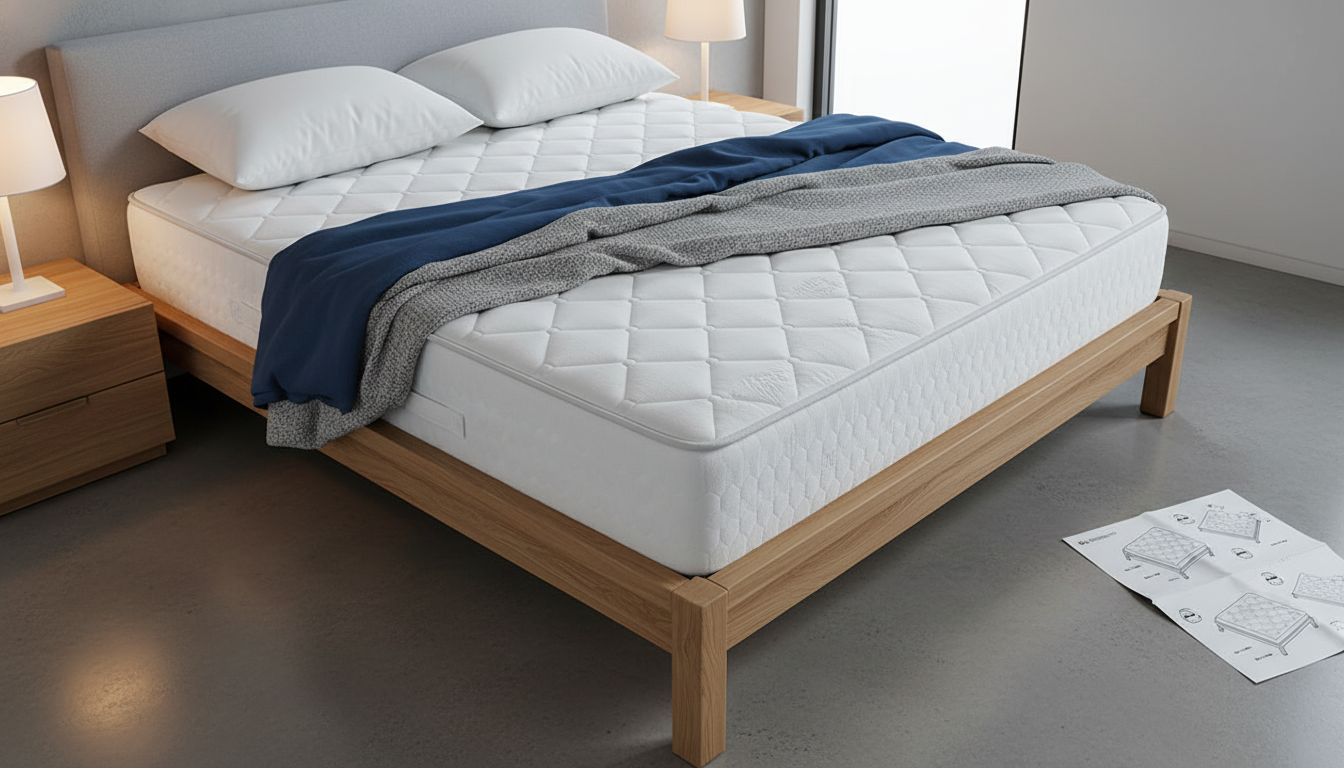
Not always. Whether you need a box spring depends on the type of queen bed frame that comes with your bedroom set and the support requirements of your mattress. Many modern sets include a platform-style frame or built-in slats that are designed to hold a mattress directly, making a box spring unnecessary.
Some bedroom sets include a decorative headboard and footboard but rely on a separate metal bed frame (or a foundation) for actual support. If the frame is just side rails with center support but no slats or platform, a box spring or bunkie board is typically needed to create a stable surface.
If your queen bed frame has closely spaced wooden slats, a solid platform, or a panel deck, you can usually place the mattress right on top. As a rule of thumb, slats should feel sturdy and be spaced close enough to prevent sagging; wide gaps may void a mattress warranty or lead to premature wear.
Memory foam and many hybrids generally perform best on a firm, non-flexing base (platform or closely spaced slats). Traditional innerspring mattresses may be compatible with a box spring, but many brands now recommend a “foundation” (rigid support) instead of a true springy box spring.
A box spring (or foundation) can add height, make getting in and out of bed easier, and help older bed frames that were designed around a box spring fit properly. It can also prevent a mattress from sitting too low inside a tall footboard or deep side rails.
Confirm the exact support system included with your set and compare it to your mattress manufacturer’s requirements. For a deeper breakdown of frame types and what works best, see the full guide here: Do I need a box spring with a queen bed frame included in a bedroom set?
A bunkie board is a thin, rigid foundation placed on a bed frame to support a mattress when you don’t want the extra height of a box spring. It’s useful when your frame lacks slats or when slat spacing is too wide for your mattress.












Leave a comment