
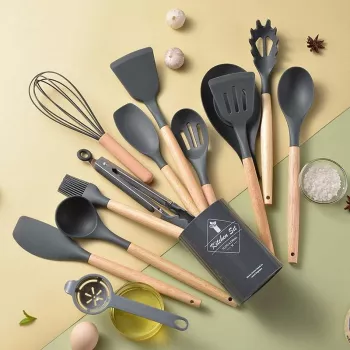
Silicone utensils can be just as safe as wooden ones when they’re made from high-quality, food-grade (platinum-cured) silicone and used within their temperature limits. Wooden utensils are also generally safe, but they require more careful drying and upkeep to prevent cracking, warping, or bacterial buildup in damaged areas. Safety depends less on the material alone and more on product quality, condition, and how the utensil is cleaned and used.
Wood handles heat well in the sense that it won’t melt, but it can scorch or dry out if left in a hot pan. Silicone is designed for high-heat cooking, yet not all silicone is equal—some lower-grade products may warp, degrade, or release odors if overheated. Always check the manufacturer’s temperature rating and avoid resting any utensil in a pan for long periods.
Silicone is non-porous, so it doesn’t absorb liquids or odors as easily as wood. That makes it easier to sanitize, and many silicone utensils are dishwasher-safe. Wood is naturally porous and can trap moisture in tiny cracks; when kept in good condition and thoroughly dried, it’s safe, but damaged wood (splintering, deep grooves, or persistent dampness) is a red flag.
Both options are gentle on nonstick cookware. Wood can develop rough edges or splinters over time, while silicone can tear if it’s thin or reinforced poorly. A sturdy silicone head with a solid core (often stainless steel) tends to hold up best for stirring, scraping, and flipping.
Choose reputable brands that clearly label utensils as food-grade silicone and provide a temperature range. If a utensil has a strong chemical smell that doesn’t fade after washing, feels tacky, or shows cracking or discoloration, replace it. For a deeper breakdown of materials, care tips, and what to avoid, visit the full guide on silicone vs. wooden utensil safety.
Look for clear labeling such as “food-grade silicone” or “platinum-cured silicone,” a stated temperature rating, and a reputable manufacturer. Avoid utensils with a persistent chemical odor, oily residue, or a sticky feel after washing.









Leave a comment