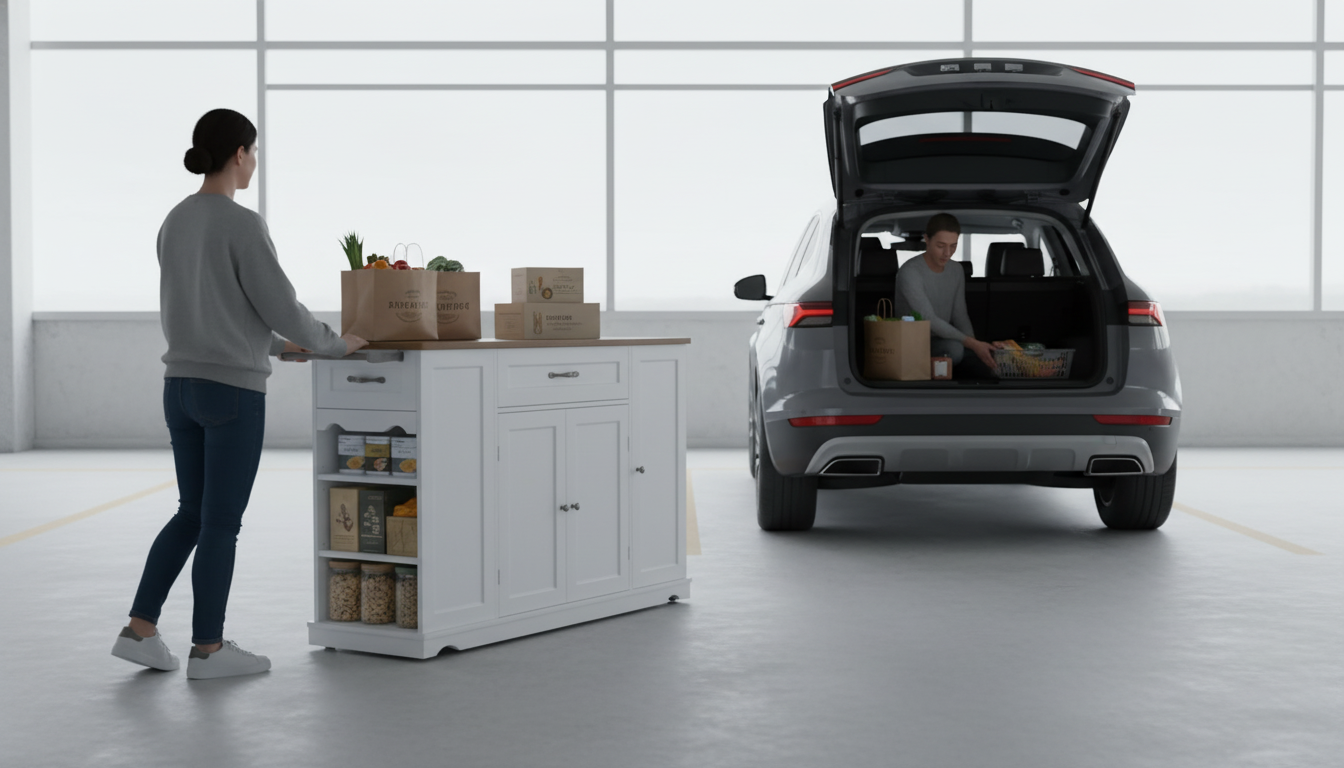
Kitchen carts are often worth buying when a kitchen needs more workspace, storage, or flexibility without committing to a full remodel. A good cart can add a dedicated prep zone, keep frequently used items within reach, and roll out of the way when the space is needed for something else.
The biggest value usually comes from how much “usable” space it creates. A cart with a solid top can function as a secondary counter for chopping, assembling, or setting down hot pans (with appropriate protection). Models with drawers and shelves help reduce countertop clutter by giving utensils, linens, and small appliances a home. If the cart includes a towel bar or spice rack, it can also consolidate daily-use tools into one easy station.
They’re especially practical for apartments, galley kitchens, and open-plan spaces where storage is limited. Many people also use a cart as a coffee bar, a baking station, or a buffet for entertaining—then tuck it against a wall afterward. Locking casters matter here: they make it mobile when needed and steady when it’s time to prep or serve.
That said, a kitchen cart isn’t always a smart purchase. If walkways are already tight, an extra piece can make the room feel cramped. And if the top material is thin or the frame wobbles, it may not handle heavier appliances (like mixers) or frequent rolling. For long-term satisfaction, prioritize stability, smooth-rolling wheels, and storage that matches what actually needs to be organized.
If you’re comparing features like drawer capacity, shelf layout, and overall footprint, see this detailed guide for a 47-inch rolling kitchen island cart with 2 drawers and buffet storage. It’s a helpful reference for understanding what to look for in a cart designed for real daily use.
Focus on a stable frame, a top that fits how you’ll use it (prep, serving, or appliance storage), and locking casters for safety. Measure clearance so the cart won’t block drawers, doors, or main walking paths.









Leave a comment