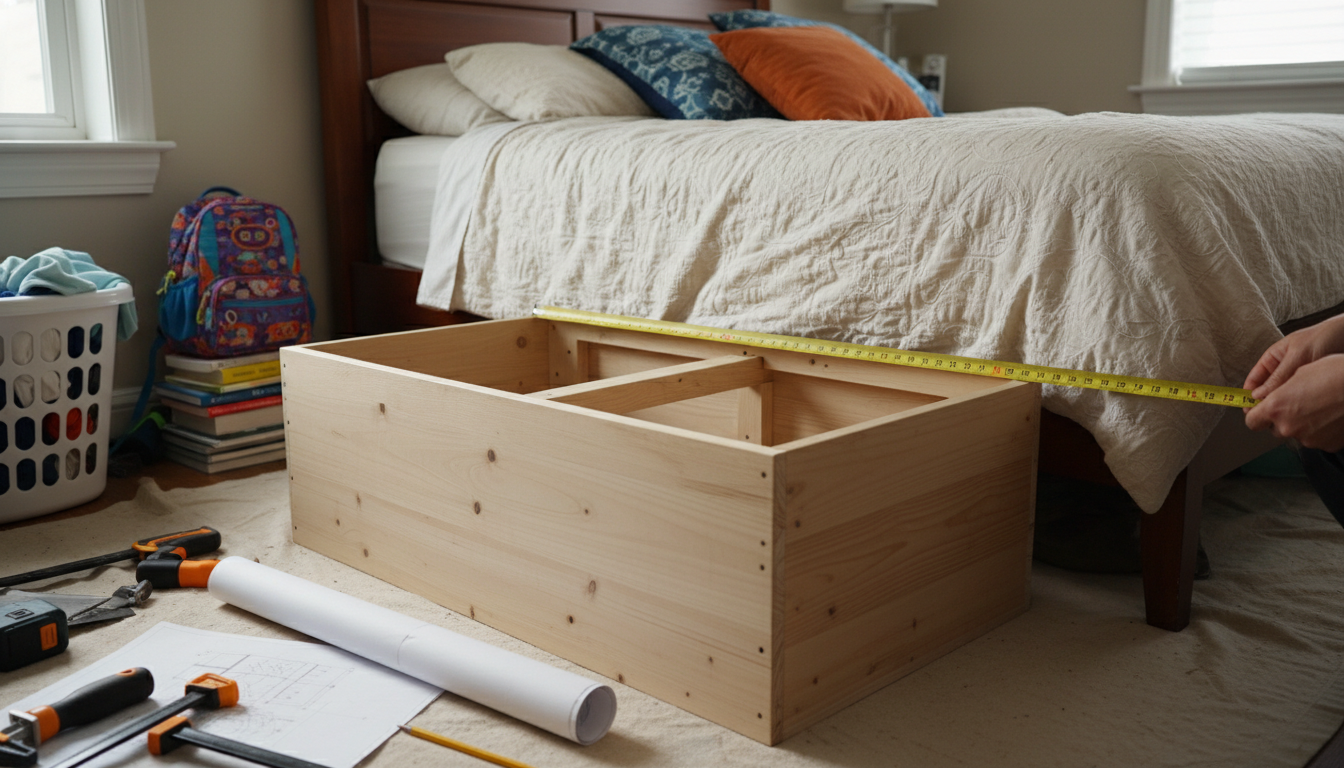
Start with the width of your bed (twin, full, queen, king) and compare it to the bench’s overall length. A common rule is to choose a bench that’s a few inches shorter than the bed width so it looks intentional and doesn’t feel cramped. If you have a footboard, measure the clear space between the footboard posts (or the narrowest point) and make sure the bench length fits within that opening.
Measure from the floor to the top of your mattress (or the top of the footboard if it’s taller). Many people prefer a bench top that lands near the mattress height for easy sitting and a balanced look. If the bench is too tall, it can press into hanging bedding or visually compete with the footboard; if it’s too low, it may look undersized and be less comfortable to sit on.
Bench depth matters most for how the room functions. Measure from the foot of the bed (or footboard) outward to where the bench would sit, then measure the remaining space to the nearest wall, dresser, or doorway path. Aim to leave a comfortable walkway so you can pass by and open drawers without squeezing.
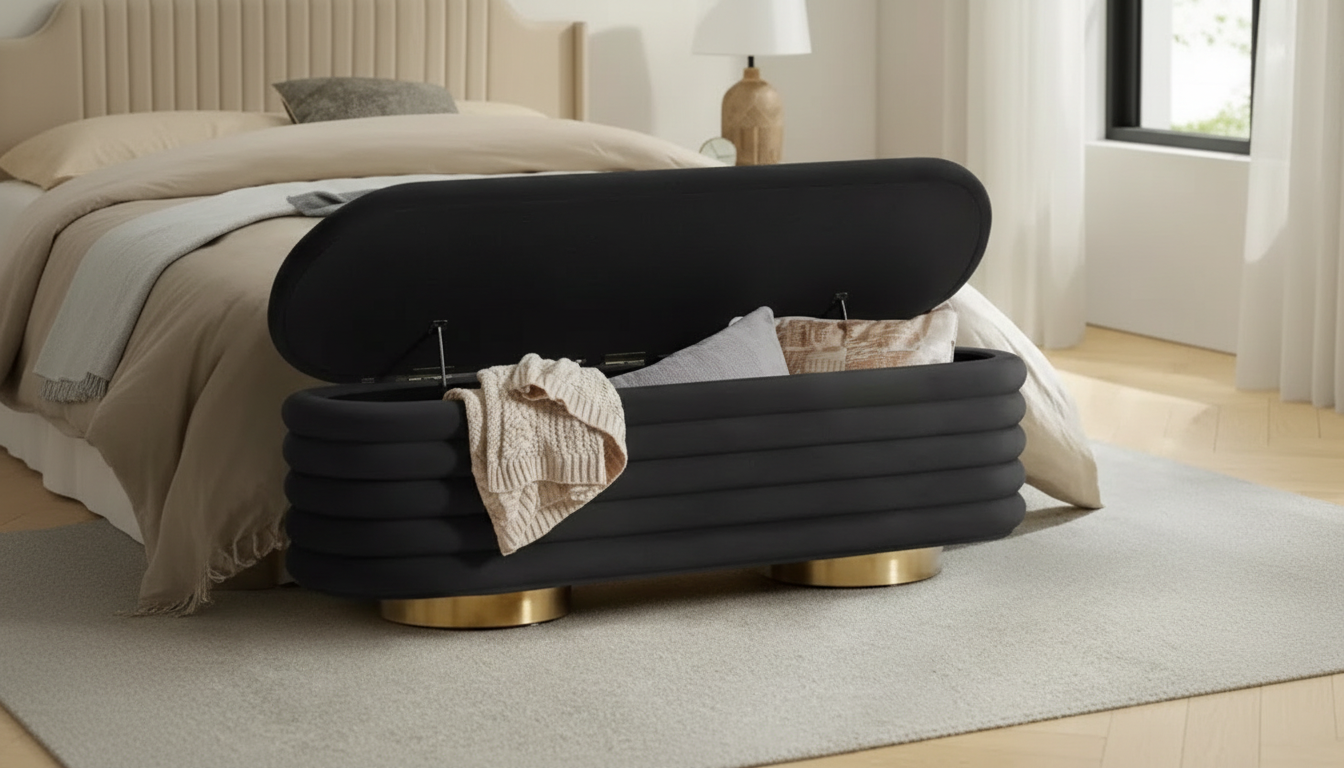
A flip-top storage ottoman bench needs space for the lid to lift. Check whether the top opens from the long side or the end, and measure the arc and clearance needed so it won’t hit your bedding, footboard, or the wall. If the lid is hinged at the back, you’ll also want a little breathing room behind the bench for easy access.
If the bench sits flush to a wall at any point, measure how far baseboards or radiator covers protrude. A slightly deeper baseboard can keep the bench from sitting square, which affects both looks and lid operation.
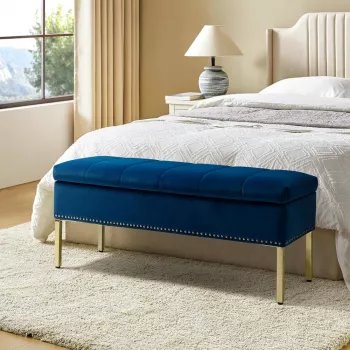
For more details on choosing the right style and proportions, see this guide to a velvet flip-top storage bench with nailhead trim.
Try to keep enough clearance to walk comfortably and open nearby drawers without bumping the bench. If the bench has a flip-top lid, leave extra room on the opening side so the lid can lift fully.









Leave a comment